
When we strip away the roles of daily organizers, financiers, and those who must have all the answers, a simple question remains in the silence: what does a child actually see while observing our relationship with what we own? Money rarely speaks in numbers; it is primarily a language of value, attention, and inner peace. We are not exploring financial recipes or quick methods for success here, but rather observing how invisible patterns become the most enduring tools a child carries with them. When money ceases to be a measure of status and becomes a resource for creation and sharing, the space in which a child grows changes as well.
Money as a Tool, Not a Measure of Inner Value
In a world that evaluates individuals through material symbols, it is easy to overlook that a child primarily learns by observing our inner state while handling resources. Money itself has no character—it becomes peaceful or restless depending on the intention we pour into it. When we discuss finances at home without anxiety or the need to prove ourselves, we create a safe space where money takes its natural place: that of a simple tool.
This relationship with resources is not taught through lectures, but absorbed. The way adults react when things don’t go according to plan, how they relate to work, mistakes, and their own time, builds a child’s invisible inheritance. In the article Leading by Example: Gifting Time and Skills, we explored precisely this idea—that the most important gifts don’t wear a bow or have a price tag. Understanding money as a resource begins exactly where the race for things ends, opening a space for conscious presence.

Five Insights Through the Pages: Books as Lasting Tools
To deepen the understanding of money beyond the confines of math and rules, we posed five exploratory questions and sought answers in literature dealing with human nature, the mind, and habits.
1. How do we react when things don’t go as planned?
What have we learned from this book as researchers? The emotional example a child observes represents the foundation of every future decision. When faced with unforeseen expenses, a child doesn’t analyze the figures, but our reaction to stress.
“The way parents handle their own emotions serves as a profound, invisible lesson for their children.”
This quote reminds us that financial literacy is closely tied to self-regulation. If money is a trigger for unrest, the child will perceive it as a source of danger or a means of proving oneself. If we learn to maintain inner peace even in challenging moments, we convey the message that resources are solvable, and peace is inviolable.
Reading recommendation: [Emotional Intelligence – Daniel Goleman]
2. The Power of Invisible Architectures and Repetition
Is our relationship with resources a matter of a one-time decision or a quiet routine built over days? Financial habits are rarely formed by grand plans; they are the result of micro-choices we make without thinking.
“You do not rise to the level of your goals. You fall to the level of your systems.”
When we observe the setup of a home, the system of allocating resources, repairing instead of automatically buying, and simple meal planning becomes a window into understanding systems. A child learns that success or financial stability is not the fruit of luck, but of inner architecture and quiet repetitions.
Reading recommendation: [Atomic Habits – James Clear]

ℹ️✨ This post contains affiliate links. Some links may earn a small commission for SoTheWay if you choose to make a purchase — at no additional cost to you. We only recommend resources and brands that align with mindful values and genuine usefulness.
3. The Philosophy of Giving Without Inner Conditioning
What happens in a child’s mind when they see that money also serves to support others, and not just for accumulation?
“When sharing becomes a natural flow of resources, the measure of value shifts from ‘having’ to ‘being’.”
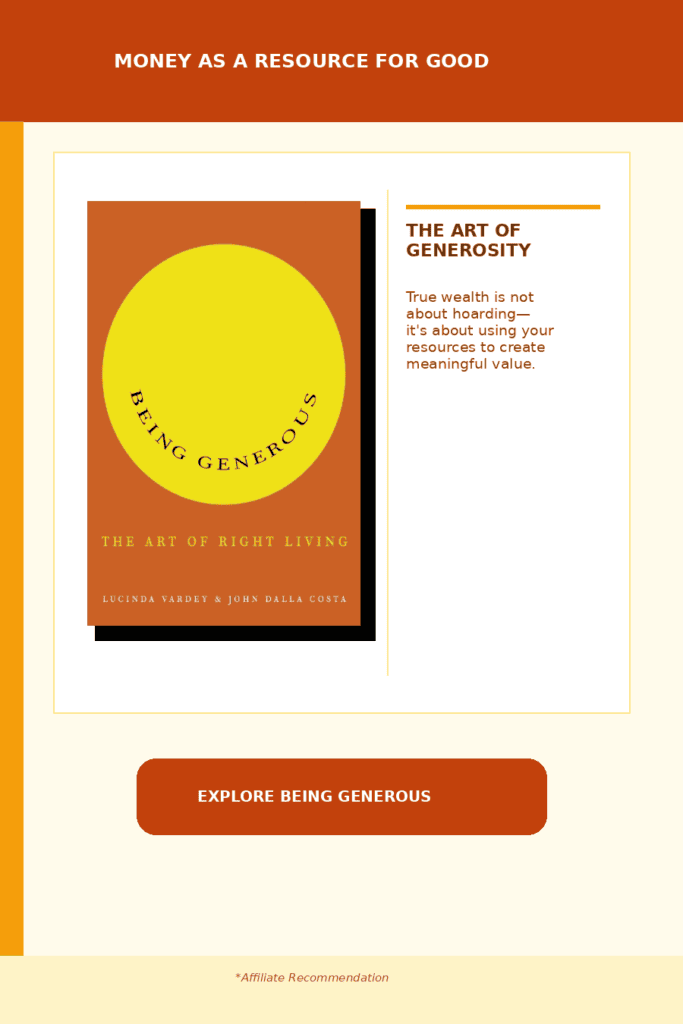
Generosity is not an expense or a sacrifice, but proof of inner abundance and connection with the world around us. Through the philosophy of generosity, a child realizes that resources circulate and that money loses its constricting power the moment it serves the broader community or someone in need.
Reading recommendation: [Being Generous – Lucinda Vardey, John Dalla Costa]
4. Neuroplasticity and Learning New Patterns
Are we forever bound to generational beliefs about scarcity, or does our inner space always have the capacity to reshape?
“The possibility of change is not limited by age, but by our readiness to observe our own automatisms.”
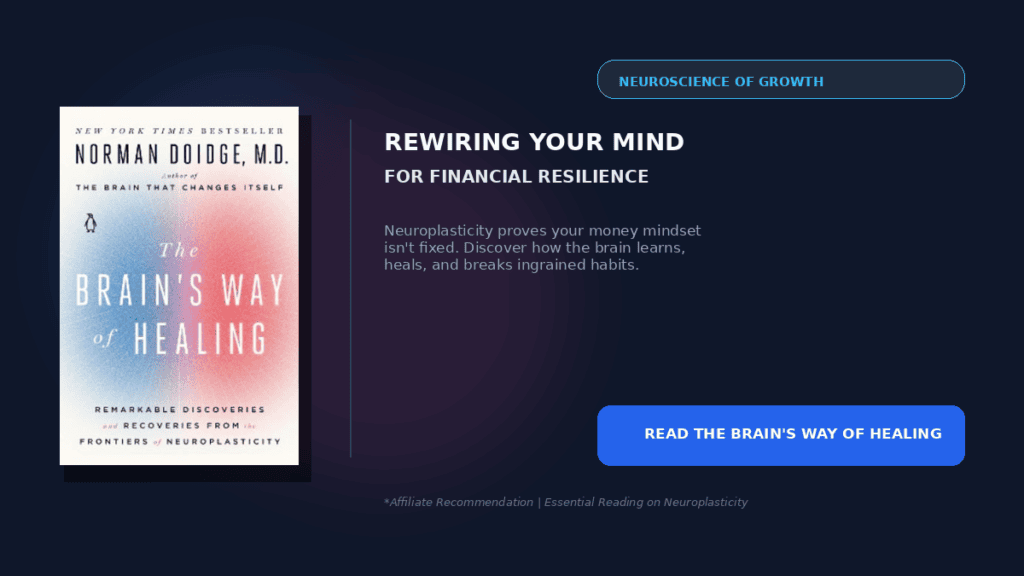
Understanding that the brain is adaptable provides freedom for both us and our children. If we notice that we view money through fear or status, those beliefs are not set in stone. The brain’s ability to change reminds us that we can always build a healthier, more peaceful relationship with everything we create and consume.
Reading recommendation: [The Brain That Changes Itself – Norman Doidge]
5. Time and Attention as the Primary Currency
How much of the actual resource is money, and how much is the attention we give away from screens while spending time together? True tools in learning financial literacy involve co-creation: making a meal from basic ingredients, discussing how things work, and understanding boundaries. When a child receives our full attention, the need for material substitutes naturally fades.
Veljko quietly observes the pile of things on the table and recognizes what is invisible.
Enter BAM Headquarters!“The gift that hands give may vanish. The gift that life shows travels far.”
SoTheWay is more than a blog. It’s a guide for your everyday small victories.
✨ Explore the entire SoTheWay galaxy →Frequently Asked Questions (FAQ)
How do you explain the difference between a want and a need to a child without creating a sense of deprivation?

Focus on shifting attention from an inner lack to inner peace. Instead of explaining that there is “not enough,” a useful approach is to discuss choosing resources for creation rather than collection. When a child understands the purpose of a resource, desires cease to be the measure of value.
When is the right time to introduce the first money management tools?
The learning process does not begin with the first coin or allowance, but with observation. A child learns about resources from the moment they notice how adults relate to meals, time, repairing household items, and their own rest. Conversations about money come naturally through everyday activities.
Why are books on general human mechanisms a better resource than financial guides for kids?

Traditional guides often treat money exclusively through math, techniques, and rules. Books that deal with emotions, habit formation, neuroplasticity, and the philosophy of giving build a profound understanding of human behavior. This understanding is the true foundation of stable financial literacy and inner peace.