
Sometimes the most meaningful gifts don’t look like gifts at all. They can’t be wrapped in paper, tied with a ribbon, or given a price tag. They are moments of unhurried time, undivided attention away from screens, practical skills shared through daily life, the way we speak to strangers, and our relationship with money, food, health, mistakes, and our own quietude.
A child may not remember every piece of advice they hear, but they will always remember the world they observed.
They notice how adults treat what they own. How they react when things fall apart. Whether a stranger is viewed as a threat or simply someone they haven’t met yet. Whether exhaustion is met with more noise or a moment of genuine rest. Whether worth is measured by possessions or by what can be shared.
That brings us to a compelling question: what are we truly giving a child when we give them our example?
Perhaps time. Perhaps curiosity. Perhaps the ability to prepare a meal, fix something broken, wait patiently, listen deeply, explore the unknown, or recognize when another person needs a hand.
Objects come and go. Patterns stay forever.
Behind all social expectations—the image of the “perfect parent,” the “successful child,” or the “ideal family”—a simpler truth remains: what is a child learning about life simply by being close enough to watch us live it?
Veljko might quietly whisper:
“A gift given by hand can vanish. A gift shown through life travels far.”
Children Inherit Patterns, Not Just Belongings
There is a unique textbook that has no cover, no pages, and no place on a shelf. It is written daily, mostly without intent. Its lessons hide in subtle micro-reactions: when something expensive breaks, when money runs short, when someone makes a mistake, when an unfamiliar face appears, or when everyday stress knocks on the door.
A child watches.
They don’t always need to understand the situation fully; simply seeing how adults navigate it is enough. This is how patterns take root.
Micro-Reactions: The Invisible Curriculum
Some of the most profound life lessons are never formally taught.
There is no classroom lecture explaining how to view money as a tool rather than a source of fear or status. There is no syllabus on handling mistakes or meeting strangers. Yet, the learning happens continuously.
- If a mistake triggers panic, a child learns that error is dangerous.
- If money is always accompanied by tension, they learn that finances are something to dread.
- If strangers are met with respect and mindfulness rather than contempt or fear, the world takes on a friendlier hue.
- If stress is met with a quiet pause rather than passed on to the next person, that pause becomes a lifelong tool.
None of these lessons require words; they are transmitted through the rhythm of everyday life.
This changes the very definition of generosity. A gift doesn’t have to be an object passed from one set of hands to another—it can be the manner in which we carry ourselves. Patience can be a gift. Curiosity can be a gift. The willingness to say, “I don’t know, let’s explore together,” can be a gift. Even how we respond when everything goes wrong can become an inheritance.
Gifting through example is one of the quietest forms of generosity. It requires no ceremony, expects no praise, and simply leaves a lasting imprint.
When Time Outweighs Toys
Time often feels infinite until it slips away. Money can be counted, objects inventoried, and physical gifts tucked into drawers. Time works differently. Once given, it transforms into something that cannot be bought off a shelf: a shared memory, a new skill, a meaningful conversation, or a shared discovery.
Cooking together becomes far more than meal prep—it is an exploration of patience, measurements, culture, trial, error, and the simple joy of turning raw ingredients into dinner.
A simple walk morphs into a field expedition.
A conversation doesn’t need a definitive conclusion; sometimes creating space for an open question is enough.
Learning a skill doesn’t require a rigid syllabus. Fixing an object, planting a seed, reading a map, making tea, or understanding how a tool works all serve as joint explorations of the physical world.

What if time spent together was viewed as a conscious gift? Not a reward, not an obligation, and not another item on a parenting checklist—but a true currency of attention.
The Time Bank
Picture a small family bank that stores no money or toys, but rather hours of shared exploration:
- One hour of cooking from scratch.
- One hour of aimless walking and observing.
- One hour of learning a hands-on skill.
- One hour of conversation with screens put away.
- One hour of researching something nobody in the house understands yet.
This “Time Bank” needs no complex spreadsheets; it exists as a mindset that shifts our questions. Instead of asking, “What will you get?” we ask, “What will we discover together?”
Time ceases to be something we lack and becomes the raw material used to build relationships. The beauty of non-material gifts is that as more time, attention, and knowledge circulate, their value doesn’t deplete—it multiplies.
A shared hour creates a story.
A story builds a skill.
A skill leads to independence.
And independence eventually becomes something passed along to another human being.
A single hour is no longer just an hour; it becomes a legacy that continues to travel.
A Gift That Grows With the Child
Some gifts possess a unique quality: they refuse to remain static after they are given. Over time, they evolve right alongside the person who received them.
A simple recipe can eventually become the self-reliance needed to prepare a wholesome meal. A habitual walk can transform into viewing one’s body as a lifelong ally rather than a project in constant need of repair. A calm conversation during a turbulent moment can leave a blueprint for how to navigate complex emotions decades later.
Gifts like these carry no expiration date. In fact, their value appreciates as a child grows into independence.

Health as an Action, Not Just an Explanation
Health is frequently discussed, but the human body learns far earlier from what is repeated than from what is lectured.
When a meal is prepared as an act of care rather than a chore, a child receives more than nourishment. They get their first introduction to the idea that self-care can be daily, grounded, and simple. Cooking a real meal becomes an informal lesson free of blackboards or chalk:
- Where do these vegetables actually come from?
- Why do certain ingredients complement each other?
- How does a simple broth take shape?
- What happens when something is left on the heat too long?
Behind a simple dinner, biology, culture, chemistry, household economics, and family history naturally converge. That is the beauty of learning through daily rhythm: a single action carries far more depth than appears on the surface.
Physical movement works the same way. A child who observes adults treating a walk as an obligation learns that movement is a task to be checked off. A child who observes an adult taking a walk to clear their mind, explore a trail, or simply take in the air receives a fundamentally different message. Movement ceases to be a punishment for the body; it becomes a way to reconnect with it.
The same principle applies to rest. In a culture that routinely rewards non-stop busyness, the capacity to pause is a rare gift:
- Making unnegotiable space for sleep.
- Stepping back for a quiet pause.
- Leaving moments unassigned and free of digital content.
- Allowing the mind to sit idle without needing to produce an output.
These are not marks of laziness. They are practical boundaries between sustainable activity and burnout. Mental hygiene begins precisely where emotions are permitted to exist without an immediate urge to suppress, analyze, or fix them.
A child who sees an adult say “I am overwhelmed,” “I need a moment of quiet,” or “I made a mistake” receives something far more useful than an illusion of perfection. They receive permission to be human.
Health quietly shifts from a problem to fix when things break to the way life is lived. That is a gift that expands with age. The goal is never to keep a child dependent on external reminders to eat, sleep, rest, or move, but to help them recognize the inherent value of those habits when no one else is standing beside them.

Money as a Tool, Not a Measure of Worth
Money holds a distinct power. It functions as an everyday transactional object while simultaneously carrying an entire system of implicit messages about security, effort, success, and belonging. A child absorbs these cues long before they ever manage a budget:
- They hear the tone of voice used when bills are discussed.
- They notice what gets purchased effortlessly versus what prompts endless debate.
- They observe whether work is respected only when it yields high income, or if value is recognized in time, skill, craftsmanship, and care.
Financial literacy begins long before spreadsheets. It starts with a foundational question: What does it truly mean for something—or someone—to have value?
Labor can generate income, but it can also build knowledge, safety, trust, capability, and community resilience. When a child sees effort respected regardless of how flashy or high-paying a job might be, they absorb a critical lesson about work: market price and intrinsic value are not the same thing. That distinction is far easier to grasp through daily living than through a textbook definition.
A similar dynamic applies to distinguishing between desires and needs. Not every desire is a problem, and not every need is urgent. Between them lies ample room for reflection:
- Is this wanted because it is useful?
- Is it needed for a specific task?
- Is it desired simply because someone else acquired it?
- Did an advertisement capture momentary attention?
- Will this genuinely enrich everyday life?
These inquiries do not need to turn a home into a stern financial seminar. They can comfortably exist as casual conversations in the grocery aisle, while selecting a birthday gift, during trip planning, when repairing a broken item instead of replacing it, or when deciding to save resources for something further down the road.
Financial literacy evolves from mere math into the practice of observing the consequences of choices.
Rather than repeating basic financial rules, the focus shifts to foundational patterns: How are financial behaviors caught before a child even learns what to call them?
- Through the deliberate way items are purchased.
- Through the calm way savings are built.
- Through transparent conversations about labor.
- Through a willingness to repair what is worn.
- Through understanding that a “no” to a purchase rarely means “never”—often it simply means “not right now.”
Money finds a healthier placement: not at the peak of a value system, not as proof of superiority, and not as an enemy to be feared, but as a practical tool that helps direct time, energy, and resources toward what genuinely matters.
When a child eventually steps out to manage that tool on their own, the most valuable asset won’t be the numbers they can calculate, but the question they ask before spending:
“How does this choice serve the life I am trying to build?”
Veljko would likely nod at that:
“Money is merely a tool. But the hands holding it choose where it goes.”
The Gift of an Open World
What Does a Child Learn When We Greet a Stranger?
The modern world often quietly urges us toward caution. It teaches us to avert our gaze when passing others, quicken our pace, and view unfamiliar faces as unpredictable threats or background noise.
Then, a simple, unassuming micro-interaction occurs.
You walk into a local bakery, step onto a bus, or navigate a narrow path, and for no dramatic reason, you calmly say, “Good morning” or “Thank you.” A child observes this.
In that seemingly minor gesture, a silent rewrite of their mental map takes place. Everyday courtesy isn’t just textbook politeness; it is a gentle step outside our comfort zone. When an adult acknowledges the presence of another human being without fear or expectation, the child receives an implicit message: The world is not a battlefield. It is a network of people.
Through these brief interactions, empathy is caught rather than preached. The child notices that the cashier, the neighbor sweeping leaves, or a passing stranger each carry their own name, their own fatigue, and their own inner life.
This builds genuine internal security. When a child sees that the boundary of our world doesn’t end at the front door, the world ceases to be a hostile place seen on the news and becomes a shared landscape ready for exploration.
Travel as the Gift of a Different Perspective
There is a vast difference between simply passing through a space and truly inhabiting it.
Stepping out of daily routines does more than change the scenery—it sheds social masks. On the road, plans rarely unfold perfectly. Buses run late, signals drop from the map, and local languages sound unfamiliar. Yet, the real value of travel hides within those very disruptions.
A child watches how adults react when lost. Is it met with panic or curiosity? Is inconvenience handled with frustration or by asking a local for directions?
Connections made while traveling carry no baggage from the past or rigid roles. They arise from pure presence. When a child sees an adult share a meal, hold a simple conversation with someone from an entirely different culture, or warmly embrace unfamiliar customs, they learn that differences are not barriers—they are invitations to learn.
That is the precise moment a simple trip turns into a meaningful journey.
Gifting a child a different perspective means showing them that countless ways exist to live, love, work, and build a community. They realize that while home is precious, the wider world is ultimately a shared dwelling.
Where Attention Goes, Our World Grows
If we were to identify the single most contested resource today, it wouldn’t be money. It is attention.
In an environment designed to constantly solicit, entice, and capture our gaze, focused attention has become our rarest currency. What we feed our focus doesn’t just dictate how we spend our hours; it explicitly defines the boundaries of the world we inhabit.
A child sees this clearly—long before they understand algorithms or work burnout.
They notice where our eyes go when the workday ends. They see whether our gaze remains fixed on a screen while they share what happened at school, or if we look directly into their eyes. They observe what we deem important enough to interrupt our current tasks for.
This forms an invisible value system. Growing up around adults with fragmented attention—split across rapid notifications, short-form clips, and endless scrolling—teaches more than just impatience; it conveys that the world is a place rarely worth observing deeply.

Why Presence Differs From Physical Proximity
We can sit in the same room with a child for hours without truly being there.
Physical proximity is merely a frame; presence is what fills it with life. It is the distinction between a distracted “Mhm, nice” offered while scrolling through updates, and the deliberate act of setting the phone aside to meet the child’s gaze at eye level.
Offering a child undivided attention—even for fifteen dedicated minutes—gives them far more than time. It delivers a clear message: Your inner world matters more to me right now than all the digital noise combined.
This lays a foundation of internal stability. A child who experiences being truly heard and seen is far less likely to seek rapid, superficial validation elsewhere.
Analog Rhythm in an Era of Digital Fatigue
Modern life frequently induces a subtle, chronic exhaustion: digital fatigue. It is not physical tiredness solved by sleep, but a sensory saturation caused by a constant stream of information lacking emotional depth.
When a day is filled with friction-free scrolling, the brain receives rapid dopamine spikes without meaningful engagement. Media psychology offers a telling detail: despite spending hours holding smartphones and gazing at displays, smartphones appear in dreams surprisingly rarely (for only about 2% to 3% of people).
Why? Because during night-time memory processing, the mind rarely integrates shallow, mechanical stimuli lacking emotional or sensory weight. Passive scrolling leaves little impression for the brain to consolidate into its deeper narrative; to the mind, that time often remains immaterial noise.
Reconnecting with an analog rhythm is therefore one of the most practical skills we can model:
- Tangible Engagement: Working with wood, potting a plant on the balcony, or preparing a meal from scratch.
- Comfort With Stillness: The capacity to sit, observe, and reflect without needing a screen to fill the pause.
- Sustained Processes: Reading a book page by page, or constructing something that requires days rather than seconds.
Offering an analog rhythm doesn’t mean cutting a child off from technology; it gives them an anchor. It shows them that life isn’t a race of speed, but a space that expands wherever we choose to place our attention.
How Generosity Was Historically Understood
Saint Nicholas and the Invisible Gift
Today, giving is frequently bound up in ceremony, decorative wrapping, and a focus on the recipient’s reaction—or the approval of onlookers. Gifts have become visible, documented, and displayed.
Yet, history holds a very different philosophy of giving.
In the 4th-century city of Myra (modern-day Turkey), a priest carried out actions that formed the origin of modern holiday generosity: Saint Nicholas. His legacy was not about grand public donations, but quiet, nocturnal care for those in need. Historical accounts describe him anonymously leaving provisions or coins through open windows or chimneys for struggling families, taking care that no one knew the benefactor.
It was a gift that required no applause.
When we give anonymously or without seeking recognition as a “benefactor,” we demonstrate a quiet truth: the worth of an action is measured not by public praise, but by its direct impact on someone else’s life. Invisible gifts do not feed the ego; they quietly build trust in the world.
Potlatch: Wealth Measured by What You Share
Shifting from the Mediterranean to the indigenous traditions of the Pacific Northwest coast of North America, we encounter a custom that upends modern concepts of property: the Potlatch.
In their culture, the prestige of a leader or family was not calculated by how much they accumulated, hoarded, or locked away. Measuring influence meant asking: How much can this person share with the community?
This was more than simple generosity; it was a comprehensive social and economic logic. Leaders would spend years gathering provisions, textiles, and tools, only to give them all away to community members and neighboring clans during grand gatherings. The individual who left the ceremony empty-handed was considered the wealthiest—because their resources had been woven directly into the security and well-being of the collective network.
This perspective reminds us of something often forgotten in the pursuit of material goods: true security relies not on what is locked behind our doors, but on the strength of our relationships with the people around us.
Kintsugi: Repair Over Replacement
In modern consumer culture, the dominant instinct is rapid replacement: when something chips, cracks, or breaks, the simplest path is to discard it and purchase a new item. This pattern frequently spills over into interpersonal relationships.
The Japanese art and philosophy of Kintsugi offers an alternative approach.
Rather than throwing away broken ceramics or hiding the fractures with clear glue, Kintsugi artisans mend the breaks using lacquer mixed with pure gold powder. The crack is neither masked nor hidden—it is highlighted. The damaged area becomes the most illuminated and prized part of the object.
It represents care for what has been fractured.
When we sit down with a child to mend a broken toy, tape a torn page in a book, or fix a damaged box, we do more than save resources. We share a metaphor. We teach them that being broken does not equal being worthless, and that strained relationships, damaged trust, or misunderstandings do not require immediate abandonment—they call for time, patience, and the gold thread of repair.
Perhaps the most lasting gift we can offer by example is not showing a child a pristine, untouched world, but demonstrating how to care thoughtfully for the world we have, complete with its scars and stories.
A Small Household Experiment: Gifting an Experience
Philosophy is compelling on paper, but its real utility is tested in daily routines, children’s questions, and family dynamics.
We don’t need grand gestures. A simple family “micro-experiment”—using resources already on hand to shift focus from acquiring objects to creating experiences—is enough.
Here are a few practical exercises to try over a weekend:
- One Screen-Free Hour (The Analog Island): Set an agreement for every family member: for exactly 60 minutes, all phones, tablets, and computers go into a drawer. An initial quiet restlessness may appear—a mild dopamine gap we aren’t used to. Quickly, however, the room’s atmosphere shifts. Hands seek materials, eyes seek conversation, and dialogue proceeds uninterrupted by notifications. It is not a punishment; it is a conscious creation of space where presence is fully available.
- Cooking From Scratch Together: The kitchen functions as a practical home laboratory. Instead of preparing quick pre-made meals, choose something requiring a process: kneading dough, chopping fresh vegetables, or building a simple broth from basic ingredients. Working side by side teaches patience, simple food science, culinary culture, and the quiet satisfaction of crafting something that nourishes the household.
- Micro-Volunteering: Practical Empathy. Empathy is rarely learned from definitions; it is absorbed through action. Micro-volunteering requires no large organizations or budgets. It consists of small, tangible actions:
- Dropping off unused blankets or food at a local animal shelter.
- Cleaning up a small public area—such as gathering plastic from a local park.
- Preparing a small basket of fresh produce for an elderly neighbor who has difficulty moving around. Direct participation shows a child that their actions have an immediate, positive effect on someone else’s well-being.
- An Unplanned Exploration Walk: In a world where movement is heavily optimized—from point A to point B with step counters and maps—try an agenda-free walk. Step outside with one rule: turn wherever curiosity points. Notice local architecture, bird tracks in the park, unique tree formations, or patterns in old brickwork. Removing the pressure to reach a destination turns a routine walk into a field expedition.
- Exploring the Unknown Together. One of the most liberating things a child can hear an adult say is: “I don’t know. Let’s find out together.” Select a topic no one at home understands well: How do bees communicate in a hive? Why does the moon change visible shapes? How was the oldest local bridge constructed? How is paper made from scratch? Sit down together, open an encyclopedia or reference material, and piece the answer together side by side. This dismantles the myth of the all-knowing authority and demonstrates the core lesson: learning is a lifelong, self-directed adventure.
Books as Gifts That Keep Working
A book is more than bound pages; it is condensed experience—a conversation with a mind that spent years organizing a specific puzzle. Offering the right book gives someone a new lens through which to view their daily life.
From the perspective of an autodidact researcher, here is how four key books reframe giving and learning:
- Emotional Intelligence (Daniel Goleman): Children don’t learn composure from definitions; they absorb it from our response during stressful moments. Goleman highlights that the emotional modeling displayed daily at home—how anger, fatigue, or setbacks are managed—forms the most enduring invisible lesson we pass on.
- Atomic Habits (James Clear): Clear’s framework shows that we don’t rise to the level of our intentions; we fall to the level of our systems. Modeling a behavior isn’t a single heroic gesture of generosity, but the consistent building of small routines—like ten minutes of shared reading before bed or clearing the table together. Small repetitions form the quiet structure of character.
- The Art of Giving / Being Generous (Lucinda Vardey): This study of generosity returns to the core idea that the most meaningful gift is a piece of our own presence woven into another person’s daily life. Generosity is not giving away material excess when it’s convenient, but a conscious decision to share our time, patience, and attention without expecting anything in return.
- The Brain That Changes Itself (Norman Doidge): Neuroplasticity provides scientific proof that the brain is a living, adaptable landscape shaped by where we direct our focus. Offering a child rich experiences, open-ended exploration, and an analog pace physically shapes neural pathways to approach future challenges with curiosity and resilience.
ℹ️✨ This post contains affiliate links. Some links may earn a small commission for SoTheWay if you choose to make a purchase — at no additional cost to you. We only recommend resources and brands that align with mindful values and genuine usefulness.
Objects That Support Experience
This brings us to an important distinction: We don’t buy objects to replace presence; we select objects that facilitate presence.
Objects alone do not generate closeness, but a functional, warm environment provides a comfortable backdrop where presence occurs naturally. When selecting home details or gifts, look for items that invite us to slow down and explore together:
A Dedicated Reading Corner & Warm Lighting: A lamp emitting a soft, warm light paired with a comfortable chair signals to the mind that it is time to slow down. It serves as an open physical invitation for a child to sit down nearby with a book.

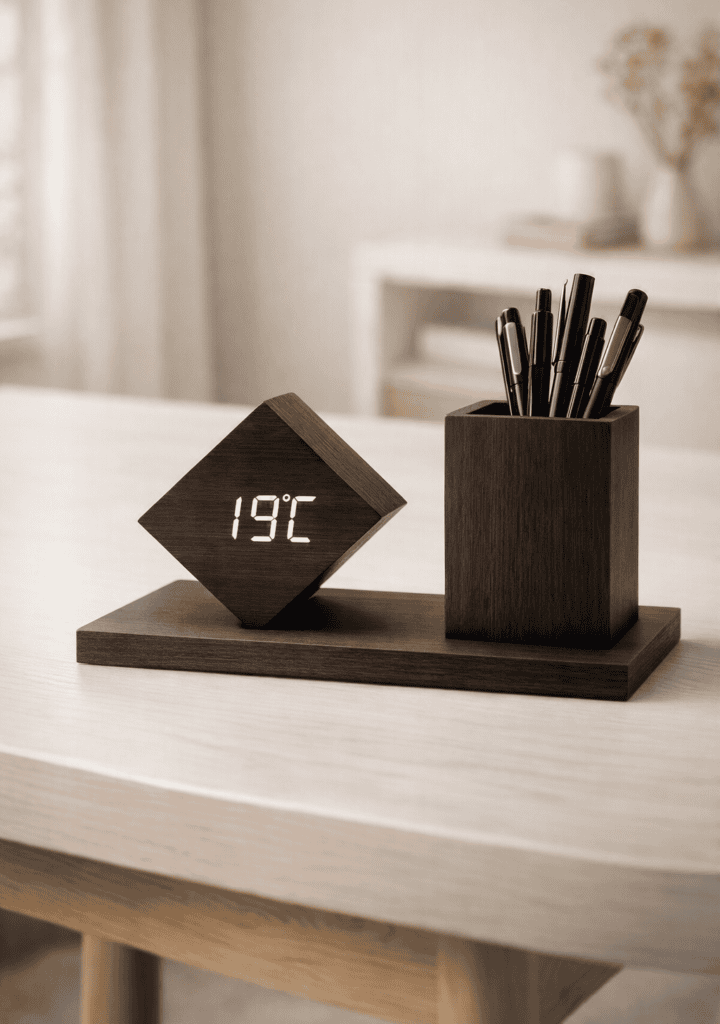
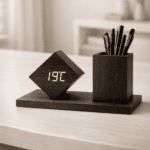
Workspace Organizers: Minimalist organizers made from natural materials keep clutter manageable, demonstrating that physical order supports mental clarity. A desk shifts from being merely a place for homework to a quiet station for personal projects.
Ergonomics & Natural Materials: A seating setup that supports natural posture reflects foundational care for physical health, framing the body as a practical partner in learning.

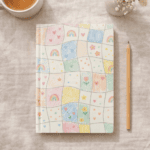
A Memory Journal: A handmade notebook or personalized journal invites the recording of shared discoveries, sketch maps from trips, or notes on small milestones. It serves as a tangible record of time spent together.

The Gift That Remains When the Box Is Gone
Wrapping paper gets discarded, ribbons untied, and toys that once prompted excitement eventually settle into the background of a shelf to make room for newer items.
That is natural; physical objects have a limited life cycle.
However, the way we listened when they spoke, a calm response to a spilled cup, a warm greeting to a stranger, a simple meal cooked together after a long day, and the willingness to say “I don’t know, let’s explore”—these patterns remain deeply woven into who they become.
Ultimately, the question behind giving shifts away from commercial offerings.
We stop asking: “What should I buy for my child?”
Instead, we ask: “What qualities do I hope my child recognizes in themselves tomorrow that they first observed in me today?”
The patterns we live out in front of them become the internal voice they will use to speak to themselves in the future. How we treat their time, their mistakes, and their natural curiosity forms the bedrock of their internal stability.
The longest-lasting gift is the one a child eventually learns to give to themselves.
Veljko might quietly tuck his ears back, pause, and whisper:
“Time spent together disappears from the clock. From the person—never.”
SoTheWay is more than a blog. It’s a guide for your everyday small victories.
✨ Explore the entire SoTheWay galaxy →
Frequently Asked Questions (FAQ) — Gifts That Matter
What are non-material gifts, and why are they vital for a child’s development?
Non-material gifts encompass time, dedicated attention, practical life skills, healthy behavioral patterns, and genuine presence consciously shared with a child. Unlike physical toys, which quickly lose novelty, non-material gifts shape a child’s worldview, build emotional resilience, and establish a healthy foundation for how they relate to money, well-being, and community.
How can I teach a child financial literacy through personal example?
Financial literacy begins by observing the everyday choices of adults. Children absorb financial habits when they see how adults value labor, distinguish between immediate desires and genuine needs, manage a household budget, and treat money as a practical tool for building stability rather than as the primary measure of human worth.
Why do smartphones and digital devices rarely appear in dreams?
Neurological research indicates that smartphones appear in dreams for only 2% to 3% of people. During REM sleep, the brain processes and consolidates emotions, sensory experiences, and deep narrative impressions. Passive, mechanical scrolling through digital feeds lacks emotional weight, leading the brain to treat it as background noise rather than a meaningful memory to be integrated.
What is the “Time Bank” concept in parenting?
The “Time Bank” is a conceptual family framework where the primary currency is focused attention rather than money or physical toys. An hour spent cooking together, taking an agenda-free walk, reading side by side, or exploring an unfamiliar topic becomes a direct investment in shared memories and lifelong skills.
How do I select a physical gift that supports presence rather than replacing it?

A thoughtful physical gift isn’t designed to distract a child from buying quiet time; it creates a backdrop for shared activity and engagement. Examples include compelling books that spark conversation, a well-organized creative workspace, outdoor exploration tools, or a dedicated Memory Journal to record shared discoveries.