
Books and stories as companions in personal exploration
You open a new tab. Then another one.
Destinations. Routes. Maps. Reviews.
Soon, there are more than a dozen windows open — each promising safety, control, certainty.
And yet, in the quiet moment before departure, something else appears.
Something that cannot be mapped.
Not fear.
Not panic.
Not the need for everything to be perfect.
Just curiosity.
A simple question: what is waiting around the corner — and how will you recognize it when you arrive?
The map is there, of course. But it does not command you.
It only offers possibilities.
As you stare at all those open tabs, weighing whether to plan every step or allow yourself to wander, another thought forms:
What if the real map has always been inside you?
The ability to follow your attention.
Your intuition.
Your curiosity.
And to trust them as the world slowly reveals its layers.
This is where books enter the journey — not as instructions, but as companions.
The Shadow of the Wind teaches that a city does not need to be conquered through routes and checklists. It shapes you as you walk through it.
The Last Homolje Highlander shows how landscapes, legends, and folklore shape not only a hero, but also the reader, willing to get lost among forests, caves, and inherited stories.
These books do not give directions.
They awaken curiosity.
For a better understanding of Serbian folklore, find a book:
I imagine you packing a backpack: space for a book or two, a notebook, maybe a small object — something that reminds you movement is not a crisis, but a form of discovery.
Perhaps you will follow a character through the streets of Barcelona.
Or through the forests of a mountainous region, few outside its borders have ever heard of.
Ask yourself: how much can we truly see of what a writer once saw?
Can we, through their characters, uncover layers we once passed by as ordinary scenery?
Remember this: the world is not your enemy.
And the unknown is not an alarm.
Yes, a certain attentiveness belongs to every story — cities have taught pickpockets their skills for centuries, just as travelers learn how to read their surroundings. But caution does not cancel curiosity. It refines it.
Before you begin, pause in that moment just before movement.
The silence before departure is not empty.
It is the space where curiosity starts to move — wandering, observing, asking questions no map can answer.
So ask yourself:
Is the map outside you — or has it always lived within?
If you remember the moment from Travel as a Remedy for Fear and Stagnation, where motion was framed not as escape but as curiosity, this text continues that same thread.
Travel — whether a physical step or the movement of thought through a book — is not healing because it removes fear.
On the contrary, it helps us recognize what is truly difficult and what is merely a story we have rehearsed too many times.
That quiet message remains: movement is an expression of curiosity, not crisis.
From this curiosity, a new perspective emerges.
We do not need a complete map, because the most meaningful one is not a list of tabs or a GPS signal.
The map forms slowly.
While reading.
While walking through someone else’s story.
While paying attention to the world around you and the one within you.
In the previous text, fear appeared as a signal, not a barrier.
A signal that invites a question:
What if I looked at the world not through fear, but through curiosity?
This brings us to the central question of this essay:
Is the map external — or does it exist within your ability to follow a story and trust your inner compass?
Curiosity pulls us forward, beyond the familiar, into spaces that are both real and imagined. Just as a book can open the doors of a city you have never visited, a city can become a book that writes you.
So the next step is not about perfect planning.
It is about opening a door — and allowing the story to lead you.
And where do we step first, into these imagined and tangible streets?
Barcelona — a city that does not want to be mastered,
but invites you to get lost, and quietly find yourself.
Barcelona — A City That Refuses to Be Conquered
Barcelona is not a city you conquer with an itinerary.
It is not meant to be read from a map or reduced to tourist templates.
It invites you to wander.
The Gothic Quarter folds into itself like a labyrinth, its narrow streets whispering stories older than the stone beneath your feet. El Raval hides inner courtyards, small galleries, and street artists — quietly testing the attention and curiosity of anyone willing to walk without certainty.
The streets are narrow. Squares appear without warning. Art emerges from shadows — balconies, walls, forgotten fountains.
The city does not offer direction.
It offers a possibility.
Every step, every wrong turn, every half-open door becomes part of an inner map — one that belongs not to the city, but to the person moving through it with awareness.
In The Shadow of the Wind, Zafón’s Barcelona is not a backdrop.
It is a living character.
The city guides the protagonist without instructing him. It rewards curiosity, patience, and the willingness to get lost — because only then does it reveal its secrets. The hero does not search for a path; the path finds him.
Through his eyes, the reader learns to leave traces not according to rules or routes, but according to the rhythm of attention.
Beneath the surface, Barcelona carries the weight of its post-war history — a city shaped by repression, silence, and identities that once had to whisper. Literature becomes refuge: a space where the city remembers without shouting. Silence, fragments, and hidden signs speak louder than visible streets.
Within this exploration, one thing becomes clear:
Zafón’s Barcelona does not ask for a map.
It asks for presence.
The Book as an Inner Map
In The Shadow of the Wind, both the city and the protagonist reveal themselves through spontaneity and wandering.
Daniel Sempere does not begin with a plan. Each street, courtyard, and shadow becomes a trace shaping his experience. The Cemetery of Forgotten Books functions as a metaphor for inner knowledge — places that do not appear on maps, but remain accessible to those who know how to look and listen.
Barcelona itself is a city of remarkable libraries, where architecture and history preserve layers of culture and memory accumulated over centuries. The Biblioteca de Catalunya, housed within a former Gothic hospital, holds rare manuscripts and quiet rooms where time feels suspended. Similar spaces — hidden within courtyards and old buildings — are not merely places for reading. They are spaces for introspection, wandering, and encountering the past.
In an age where information is endlessly available, the paradox remains: many still choose not to truly know. Reading books like The Shadow of the Wind reminds us that spontaneity is not a mistake, but a gateway to deeper experience.
Wandering through a story teaches the same skill as wandering through a city: how to follow attention and intuition, how to notice what cannot be planned.
For those preparing to walk through Barcelona with Zafón’s characters, questions naturally arise:
Will you recognize what the author once saw — or interpret the space through your own rhythm?
Will you trace the inspirations that guided the protagonist — or discover your own?
And how will you meet the inner states that surface when exploration turns inward?
The Writer and His City
Carlos Ruiz Zafón was born in Barcelona in 1964. Growing up in the city, he absorbed its layers of history, architecture, and urban myth — elements that later shaped his literary voice. Early work in publishing and journalism sharpened his attention to detail and trained him to collect fragments of lived experience.
His sources of inspiration ranged from historical documents and Gothic architecture to local legends and personal memory. Life challenges, including illness and professional uncertainty, further deepened his sensitivity to hidden stories and overlooked spaces.
Zafón often emphasized that both characters and cities emerge from an interaction between memory and lived experience — a process that demands attention, curiosity, and a willingness to get lost to find something meaningful.
A Companion Before the Journey
For those who wish to begin their journey through Barcelona with an inner map, The Shadow of the Wind is not a guidebook.
It is a companion.
The novel does not dictate routes. It opens space — for wandering, for observing urban layers, for exploring internal labyrinths alongside physical ones. Before stepping into the streets, the story can be read not to plan a path, but to awaken curiosity and sharpen perception — the inner compass needed to move through the unknown.
If The Shadow of the Wind reveals how a city preserves its memory through books and architecture, another landscape preserves its stories differently.
In Eastern Serbia, the mountainous region of Homolje guards its secrets through oral tradition — myths, legends, and folklore passed down across generations. One world is urban and European, the other rural and remote — yet both insist on the same truth: memory survives through story.

In Barcelona, stories are kept in libraries and stone.
In Homolje, they live in forests, caves, springs, and spoken words.
In both places, space reveals itself only to those willing to move slowly, attentively, and without full control.
Travel with a Book — whether through the narrow streets of the Gothic Quarter or the forest paths and caves of Homolje — teaches the same lesson:
A map is not only an external plan, but also the ability to follow your inner compass and sustained attention.
A Different Kind of Adventure — Where the Landscape Sets the Pace
For those seeking an experience where nature itself sets the rhythm — offering space for silence, attention, and inward exploration — Eastern Serbia emerges as an unexpected destination.
This is not a region shaped by completion or conquest.
It does not provide a predefined route.
It offers something rarer: room to listen.
Homolje is a mountainous area in southeastern Europe, marked by dense forests, deep caves, and powerful springs. Places like the Resava Cave and the Krupaj Spring do not guide visitors forward — they slow them down. Here, the inner map has space to awaken.
Travel experiences in this region, such as those curated by local adventure groups, tend to avoid over-structuring. Equipment becomes support, not command. Movement is guided by presence and curiosity rather than strict schedules.
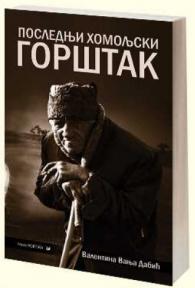
This approach mirrors the spirit of the book The Last Highlander of Homolje by Valentina Vanja Dabić.
Through the character of Vujo Pržak — a figure deeply connected to the land, its legends, and its natural rhythms — the reader is invited to move through Homolje not as a visitor, but as a listener.
The novel does not explain the region.
It allows it to speak.
Through the author’s dedication to preserving folklore and local traditions, reading becomes a way of letting the landscape lead. Forests, caves, and springs are not scenery; they are participants. The stories carried by generations of people who lived here become part of the journey.
Just as Daniel Sempere discovers Barcelona by walking without certainty, the reader of The Last Highlander of Homolje discovers this region through narrative, legend, and quiet attention.
The Legends of Homolje — Voices of Mountains and Caves
Homolje has preserved its stories for centuries through oral tradition. In a landscape shaped by isolation and nature, myths did not disappear — they adapted.
Many of these legends treat nature not as background, but as a living teacher and guardian of memory.
Forest Fairies of the Mountain Clearings
Local stories speak of forest fairies who protect the balance of nature. They are said to help those who respect the land, while misleading or punishing those who exploit it. These tales function less as fantasy and more as ethical reminders: the forest watches.
Serpents and Dragons of the Caves
Resava Cave and other underground spaces are often linked to legends of serpents guarding hidden treasures, or dragons inhabiting deep mountain valleys. Such stories once served as warnings — teaching caution and reverence toward dangerous, unknown places.
The Healing Waters of Krupaj Spring
Krupaj Spring is associated with legends of curative water protected by nature spirits. For centuries, people came seeking strength and healing, believing the water’s power depended on approaching it with respect rather than demand.
Ancestors Who Walk the Forests
Stories of ancestors who continue to watch over paths and clearings remain alive in local memory. These figures warn, guide, and protect — symbolically binding the living community to both land and past.
Heroes of the Highlands
Homolje’s legendary heroes represent harmony between human life and the natural world. Vujo Pržak, the protagonist of The Last Highlander of Homolje, stands as a literary continuation of this tradition: a character who does not dominate the mountain but lives in dialogue with it.
History and Natural Landmarks — Where Space and Story Intertwine
Homolje is not only a landscape of myth. It is a region shaped by centuries of human presence.
Its mountainous terrain fostered small, self-sustaining communities based on pastoral life, farming, and forestry. Geographic isolation helped preserve customs and traditions that disappeared elsewhere, making oral storytelling the primary vessel of cultural memory.
Resava Cave, one of the most significant natural sites in the region, was officially explored in the early 20th century. Beyond its impressive stalactites and chambers, archaeological findings suggest long-term human presence. Legends of serpents and dragons surrounding its halls reveal how natural phenomena and mythology became inseparable.
Krupaj Spring stands as a symbol of Homolje’s natural abundance. Known since Roman times, its powerful waters and surrounding canyons became gathering points for spiritual and communal life. The spring’s mythology reflects an ancient understanding: water is not merely a resource, but a force deserving respect.
Together, history and nature turn Homolje into a place where landscape and legend merge. Walking through forests or entering cave corridors creates a sensory connection with past generations — much like in The Shadow of the Wind, where the city guides those who know how to follow subtle traces.
In this context, The Last Highlander of Homolje becomes a literary bridge between nature and history. It offers readers a way to understand local identity while activating the inner map of the explorer: attention, curiosity, and the willingness to get lost — both in space and within oneself.
Micro-Adventure — Wandering That Shapes Thought
Sometimes a journey doesn’t begin at an airport or on a forest trail.
Sometimes it begins the moment you step into a world of stories.
What if the center of your adventure moves into an armchair,
and the map settles into the pages you hold in your hands?
In this space, The Shadow of the Wind and The Last Highlander of Homolje become guides.
They don’t direct your steps.
They don’t point north or south.
They open the space.
You walk through the Gothic Quarter — through Daniel’s eyes.
You enter the forest valleys of Homolje through the footsteps of Vujo Pržak.
Each square, cave, or path becomes a parallel place, where silence and curiosity quietly begin to build an inner map.
Wandering without a goal, in this context, is not getting lost.
It is training attention.
Every step — whether taken in the physical world or in thought — has the potential to reveal unseen corners. To surface memories, questions, and emotions that were waiting to be noticed.
A short journey with minimal planning becomes an experiment:
What happens when you don’t know where the road leads?
When you listen to your own rhythm, and to the rhythm of the space around you?
Reading in chapters adds another layer.
You follow the story — but you also follow yourself.
Which places pull you in?
Where would you stop, touch the stone, listen to the wind through leaves, breathe in the scent of old libraries or damp cave corridors?
All of these impressions form an internal map — just as real as GPS, but far richer.
Because this one holds experience, curiosity, and presence.
And when you return home, the ritual matters.
A shower. Tea. Silence. Tidying the space.
These actions are not just physical reset buttons.
They are the moments when the mind completes its wandering — connecting the dots it passed along the way: stories, images, sensations.
Small actions. Small micro-adventures.
Together, they build a bridge between the inner world and the outer one — between literary landscapes and real spaces.
In these quiet steps lies the true practice of travel:
How to follow curiosity,
how to trust the inner map,
and how to turn reading into a lived experience.
Supporting the micro-adventure
ℹ️✨ This post contains affiliate links. Some links may earn a small commission for SoTheWay if you choose to make a purchase — at no additional cost to you. We only recommend resources and brands that align with mindful values and genuine usefulness.
Glow Up — mental detox practices, attention rituals, and small health anchors while exploring inner landscapes.


Intergalactic Footnote 🌌
If you constantly check the map, perhaps you don’t trust the terrain.
And if you don’t trust the terrain, how will you trust yourself?
This is not just a note for travelers moving through cities and forests.
It’s a message for the future explorer — for you, who may one day walk through Homolje, descend into Resava Cave, or follow the flow of Krupaj Spring.
In these landscapes, old customs and legends still whisper through leaves and water.
The heroes of local mythology, mountain fairies, and cave guardians may no longer appear in daily life — but their presence continues to shape the land.
In the same way, The Shadow of the Wind and The Last Highlander of Homolje shape the reader’s attention and curiosity.
Consider this a small guide:
The mythology and history of Homolje are not stories meant only for children.
They are layers of memory — waiting to be uncovered, read, remembered, and integrated into the inner map that guides a life.
Every legend.
Every hero.
Every quiet forest and hidden cave.
Each is a trace — a subtle signpost reminding you to explore, to ask, and to notice.
In the SoTheWay universe, these footnotes are small stations of awareness:
The world is layered,
and the real map is the ability to recognize those layers — and move through them with curiosity rather than fear. 🌌
SoTheWay is more than a blog. It’s a guide for your everyday small victories.
✨ Explore the entire SoTheWay galaxy →Closing the Circle — A New Definition of Safety
Safety is no longer knowing exactly where the path leads.
Safety is the ability to orient yourself when you turn away from it — to follow an inner map and listen to the world around you.
Perhaps the map was never external at all.
Perhaps it has always lived within — in the quality of your attention, in the curiosity with which you explore stories, cities, forests, and quiet places.
Travel — whether through the streets of Barcelona or the caves of Homolje — teaches a way of seeing.
It teaches how to observe history, mythology, and custom not as static knowledge, but as living layers.
It trains the eye to notice traces — subtle signs that point toward what truly matters:
presence,
an inner sense of direction,
and the ability to get lost without losing oneself.
Every story.
Every hero.
Every legend or book encountered along the way
becomes part of your internal cartography.
This is how the circle closes:
by realizing that wandering is not the opposite of safety — it is one of its deepest forms.
Integrating support and care
Equipment and support matter, but not as control — as continuity.
Electrolytes, digestive support, and small rituals of bodily care are reminders that attention to the body and attention to the mind move together.
A steady body supports a curious mind.
And a cared-for mind is better able to read landscapes — both outer and inner.
In the end, the journey doesn’t conclude with arrival.
It settles into awareness.
The map remains — not folded in a pocket,
but carried quietly,
within. 🧭
Through this journey of books, forests, and caves, the world reveals something quietly essential:
Safety does not live in external plans, but in the ability to trust yourself, follow curiosity, and explore the layered dimensions of old stories, forgotten legends, and present moments.
Conclusion — Traces of the Inner Map
When walking the streets of Barcelona or moving through the caves of Homolje, every step becomes a conversation with space and story.
The Shadow of the Wind reminds us that truth is not found by knowing the destination, but by remaining open while moving forward.
The Last Highlander of Homolje echoes a similar wisdom: the true hero is not the one who conquers the mountain, but the one who knows how to listen — to forests, to silence, to the legends carried by the land.
Travel teaches that the map may never have existed outside us.
It lives in attention.
In curiosity.
In the willingness to get lost — and the capacity to find meaning again.
Every book.
Every path.
Every whisper of nature
becomes a coordinate on your internal cartography.
The traces are not in the streets or the caves —
The traces are within you. – 🌌 SoTheWay
FAQ — The Map Is Already Inside You
What is the concept of an “inner map”?
The “inner map” is a way to navigate life, stories, and landscapes using your attention, curiosity, and intuition rather than relying solely on external guides or GPS. In The Shadow of the Wind and The Last Highlander of Homolje, the inner map helps readers explore cities, forests, caves, and legends while cultivating mindfulness and presence.
How does The Shadow of the Wind guide readers through Barcelona?
Carlos Ruiz Zafón’s The Shadow of the Wind turns Barcelona into a living character. Through Daniel Sempere’s wandering, readers discover narrow Gothic streets, hidden squares, and quiet courtyards. The novel encourages curiosity, patience, and attentiveness — rewarding readers who let the city unfold at its own pace.
What makes Homolje in Eastern Serbia a unique travel destination?
Homolje is a remote mountain region with dense forests, caves, and springs, including Resava Cave and Krupaj Spring. Unlike typical tourist destinations, it offers slow travel, silence, and opportunities for mindful exploration. Visitors experience legends, folklore, and landscapes that guide attention and curiosity, rather than providing pre-set routes.
Who is Vujo Pržak and why is he important?
Vujo Pržak is the protagonist of The Last Highlander of Homolje by Valentina Vanja Dabić. Deeply connected to the land, local legends, and natural rhythms, he guides readers through Homolje’s forests and caves. His story demonstrates how legends and folklore can teach attentiveness, presence, and respect for nature.
What is a micro-adventure, and how can I experience it at home?
A micro-adventure is a small, intentional journey — physical or mental — that cultivates curiosity and attention. At home, you can read The Shadow of the Wind or The Last Highlander of Homolje, take notes, and let your imagination wander through cities, forests, and caves. Rituals like tea, journaling, or quiet reflection can help integrate insights into daily life.
How can literature enhance real-world travel experiences?
Reading novels like The Shadow of the Wind or The Last Highlander of Homolje prepares readers to see landscapes and cities with fresh eyes. Literature encourages noticing hidden details, following intuition, and approaching exploration as curiosity rather than checklist-driven tourism. It bridges the inner and outer journey.
Is this guide suitable for first-time travelers to Barcelona or Eastern Serbia?
Yes. This approach emphasizes mindfulness and curiosity rather than strict itineraries. Whether you are visiting Barcelona’s Gothic Quarter or the forests of Homolje, these texts and the concept of an inner map help travelers of any experience level engage deeply with place, story, and history.
How do I integrate my journey with mindfulness and wellness?
Slow travel and literary exploration work best when paired with mindful practices. Take breaks, observe surroundings, journal thoughts, or incorporate simple wellness rituals like hydration, tea, or stretching. Paying attention to body and mind together enhances the experience and strengthens your inner map.
Where can I buy The Shadow of the Wind and The Last Highlander of Homolje?
Both books are available through major international retailers such as Amazon, Book Depository, and local bookstores. They can also be purchased in digital formats for e-readers, making it easy to start your micro-adventure at home or on the road.
Why combine urban exploration with rural legend and nature in this guide?
Combining Barcelona’s urban layers with Homolje’s natural landscapes highlights how attention, curiosity, and storytelling can be applied everywhere. Both settings teach that the real map exists inside you — in the ability to notice, listen, and explore — whether in cities, forests, caves, or books.