As city streets and store displays speed up months in advance, imposing a rhythm of holidays, shopping, and mandatory cheer, what often remains within us is simply the fatigue of surviving from day to day.
We look at the piles of things around us—everything is more expensive, yet worth less and less. Still, the real question few people ask is not how much something costs on the shelf, but how much those things and mandatory relationships actually cost us on the inside. If you look a little closer beneath the rustling cellophane and big words about “love and care,” you will see the contours of a well-rehearsed theater: an arena where everyone plays for their own ego, and a gift is not an act of free will, but an admission ticket into an invisible chain of debt.
As researchers observing this system from a safe distance, let’s dive beneath the surface and see what actually happens when someone shoves a package into our hands… and how to wake up from that sleep.
The Trojan Horse in Cellophane: Expensive Gifts as an Investment in Control
Throughout history, gifting has never been pure, unconditional generosity. Anthropologists such as Marcel Mauss, in his study of “The Gift,” taught us that a gift has always been part of a system of reciprocity: to give, receive, and return. In traditional societies, gifts maintained hierarchy, forged alliances, and confirmed the power of chieftains or institutions. When we transfer that mechanism to modern consumer society and secularized holidays, we see how corporations and toxic individuals adopt the same principle—creating an artificial sense of duty and debt.
Expensive gifts in toxic relationships rarely have anything to do with the recipient’s needs; they are a projection of the giver’s power. In the psychology of control, the high material value of a gift functions as an anchor or leverage. The giver buys the right to dominance, unconsciously or consciously building a situation where the recipient will long-term remain in a subordinate position. It is an investment in future obedience—a gift with invisible interest.
When you receive a gift you didn’t ask for, your freedom to set boundaries or distance yourself is directly threatened by social norms of politeness. Any subsequent disagreement with that person will be neutralized by the argument: “And what haven’t I done for you and what haven’t I bought you?” In this way, a gift becomes a cage made of precious materials that prevents you from freely saying “no.”
From the angle of energy balance, the things we own actually own us. In a system with limited resources, where our time and space are limited, every superfluous item robs free thought of its space. Every useless thing we receive as a gift is not just a dead object—it is a small generator of chaos (entropy) that demands our attention, maintenance, and space. Objects become parasites of our attention, and we become the battery powering someone else’s material mistake.
People are often convinced they do everything out of love, but in reality, it is a circus of aggressive egoism where only “Me, me, me… mine, mine, mine” matters. A gift supposedly comes “from the heart,” but actually serves to feed the giver’s ego, present them in a better light, buy someone else’s gratitude, or soothe their own conscience. A sentence like “I worked so hard to find you this” actually means “Look how wonderful I am, and you are obligated to admire me.” It is an egocentric theatrical piece wrapped in cellophane.
In a world where everything has become a transaction, it is hard to practice genuine gratitude. How can you be grateful for a gift someone shoved into your hands not to make you happy, but to buy your obedience or soothe their conscience? True gratitude is born solely out of freedom. When a gift is blackmail, gratitude chokes in the throat and turns into nausea.
As we explored in our earlier texts on inner patterns and personal boundaries, such as the guide The Gift a Child Remembers: What Do We Truly Leave Behind Besides Things?, the most important gifts carry neither a bow nor a price tag. The true gift is an example, presence, and the space we leave for others to breathe without pressure.
Being an “Alien Under a Microscope”: The Price of Authenticity and the Cold Loneliness of Freedom
The feeling of being an “alien under a microscope” while your environment measures your every step, demands justifications, and expects you to fill their emotional voids is the classic price of sobriety in a system accustomed to autopilot. When you stop playing a role in their theater of egoism, they perceive it as a threat. You are not an obedient part of their mechanism, and that is why they judge you.
When you free yourself from the need for external validation, you face three hard truths:
Trapped in Tribal Code: The human brain is evolutionarily programmed to seek group approval. Even when we intellectually know we don’t need external validation, our deep neural pathways still look for a signal from the environment that we are “correct.”
The Loneliness of Freedom: When you stop playing other people’s roles and filling their emotional voids, the people around you become confused, offended, and withdraw. It is a transitional period where you lose the old matrix of false relationships, while the space is still empty. It is the pain of growth and clean space.
The System as a Landfill: Looking outwardly at rivers of unnecessary things and collective trash, we realize that cleaning our own space is not an attempt to change municipal cleanliness or other people’s consciousness, but an act of inner sovereignty—so we do not suffocate in someone else’s stench.
Veljko peers from the shelf, observing this inner storm, then with a quiet smile and childlike peace whispers:
“The noise outside loud is. Silence inside, your only shield is.”
How to Set a Shield and Break the Chain of Manipulation?
Shifting from the role of a “victim under a microscope” to the position of an “observer/scientist” changes everything. Instead of wasting energy on fruitless debates, apply the following tools:
The Rule of Zero Defense: When they demand you justify why you didn’t accept, buy, or do something, drop the word “because,” which opens a debate. Use neutral words: “I understand, but that doesn’t work for me” or “Thank you, but I’ll pass.” Justifying yourself is an invitation for the judge to continue the trial.
Attention Detoxification: Stop filling other people’s voids. People focused entirely on themselves seek an audience; when you withhold your reaction, their circus loses fuel and fizzles out on its own.
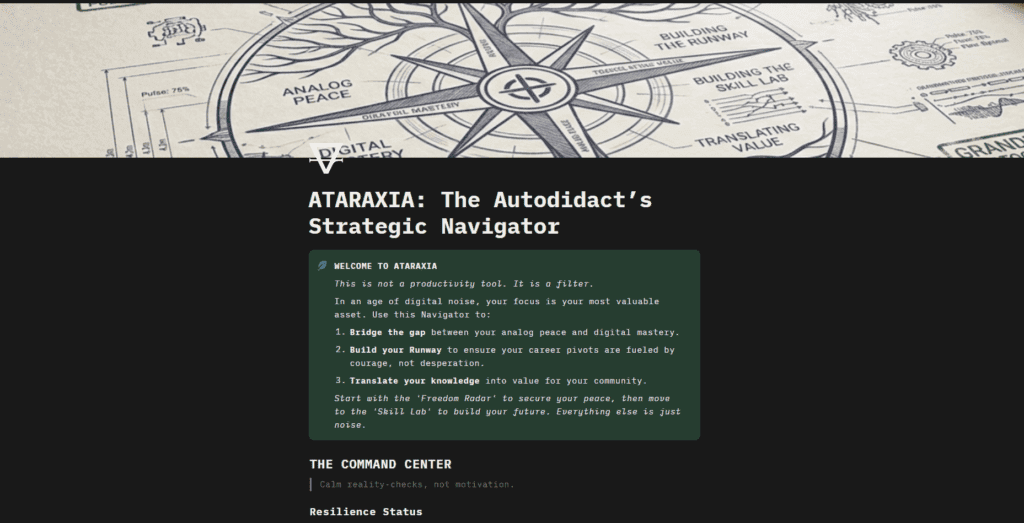
A preview of the Ataraxia strategic navigation system designed for autodidacts, deep thinkers, and intentional digital life.
Reading Recommendations for Inner Growth
To deeply understand the mechanisms of boundary setting, defense against manipulation, and building inner peace (Ataraxia), we recommend literature that serves as a reliable compass:
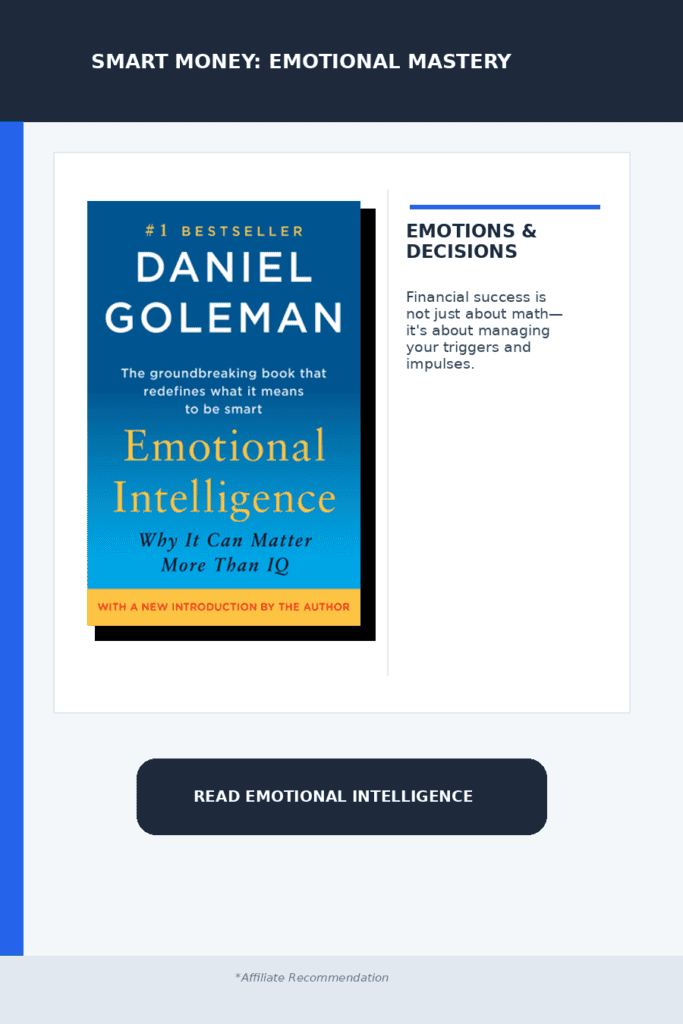
Understanding emotional triggers behind impulse spending and wealth management.
ℹ️✨ This post contains affiliate links.
Some links may earn a small commission for SoTheWay if you choose to make a purchase — at no additional cost to you.
We only recommend resources and brands that align with mindful values and genuine usefulness.
James Clear – Atomic Habits: A guide to creating systems that protect us from external distractions and preserve our energy for what truly matters.
Objects in our environment should carry meaning, not a burden. If you choose details that reflect your inner peace, visit our original collection inspired by minimalism and the freedom of choice:
Pause for a moment and free yourself from imposed rules. If you are looking for a gift that carries a sincere story, aesthetics, and an authentic message without hidden meanings —View the collection of original works here.
Discover cool and unique gifts for everyone — kids, nerds, or normies!
FAQ: Gift Manipulation and Setting Healthy Boundaries
How can I tell if a gift is a sign of care or manipulation?
A sincere gift carries freedom and joy without any conditions. On the other hand, a manipulative gift always has an “invisible interest”—usually triggering guilt, obligation, or pressure to reciprocate in a way that makes you uncomfortable. If a gift brings you anxiety instead of joy, it is likely a form of control.
What should we do when someone gifts us an expensive item we didn’t ask for?
An expensive gift in toxic relationships often serves as a lever of power and an investment in future obedience. The best approach is to set firm boundaries and refuse internal blackmail—you are not obligated to pay off someone else’s manipulative loans or bear the burden of obligations.
Why do we feel guilty when we refuse a gift from a toxic person?
Our evolutionary tribal code and social norms dictate that we must reciprocate a gift with gratitude. However, when a gift is sent by someone who drains our energy, our intuition recognizes a trap. The feeling of guilt arises because social expectations collide with our inner resistance to manipulation.
How do we set boundaries with family and friends regarding holiday gift-giving?
By using the rule of zero defense—dropping the word “because…” which opens space for fruitless debates and justifications. Instead, use neutral and calm phrases like: “I understand, but that doesn’t work for me” or “Thank you, but I’ll pass.”
Where can we find authentic gifts without commercial pressure?
Instead of mass, valueless production that clutters space and energy, choose details that carry a clear story, aesthetics, and meaning, such as unique art pieces and message-driven designs (like our collection in the Innerway Studio Redbubble Shop).
Da bismo pružili najbolje iskustvo, koristimo tehnologije poput kolačića za čuvanje i/ili pristup informacijama o uređaju. Suglasnost s ovim tehnologijama će nam omogućiti da obrađujemo podatke kao što su ponašanje pri pregledavanju ili jedinstveni ID-ovi na ovoj web stranici. Nepristanak ili povlačenje suglasnosti može negativno utjecati na određene karakteristike i funkcije.
Funkcionalni
Always active
Tehničko skladištenje ili pristup je striktno neophodan za legitimnu svrhu omogućavanja korištenja određene usluge koju izričito traži pretplatnik ili korisnik, ili u jedinu svrhu izvršenja prijenosa komunikacije preko elektronske komunikacijske mreže.
Postavke
Tehničko skladištenje ili pristup su neophodni za legitimnu svrhu čuvanja podešavanja koje ne traži pretplatnik ili korisnik.
Statistika
Tehničko skladište ili pristup koji se koristi isključivo u statističke svrhe.Tehničko skladište ili pristup koji se koristi isključivo u anonimne statističke svrhe. Bez sudskog naloga, dobrovoljne suglasnosti od strane vašeg dobavljača internet usluge ili dodatnih zapisa treće strane, informacije sačuvane ili preuzete samo za ovu svrhu obično se ne mogu koristiti za vašu identifikaciju.
Marketing
Tehničko skladište ili pristup su potrebni za kreiranje korisničkih profila za slanje reklama ili za praćenje korisnika na web stranici ili na nekoliko web stranica u slične marketinške svrhe.


 Get up to 35% Off New Releases at BooksAMillion.com!