
When the world is observed from a place of stillness, a peculiar law of nature becomes visible: the shortest words often cast the longest shadows. The word sword is spoken in a flash; the word storm is no different. Yet, behind those brief sounds drags a massive, complex, and heavy tail of reality.
With the word money, the reality is almost identical. It is uttered in a second, but within itself, it hides entire labyrinths of human fears, suppressed desires, and insecurities.
After exploring the ancient lessons on money from Babylon and dismantling the loud machinery of modern financial sensations in our previous reflection on financial literacy without the noise, the path naturally leads to a new crossroads. Before that quiet voice within a person—the one that does not seek wealth overnight, but stability and peace—the fundamental question arises: Where do we actually begin when starting from zero? What is it that would have been worth knowing before stepping into the arena of complex terminology and overwhelming information?
Veljko sits in the corner of the room, knees pulled close, observing the map of handwritten notes on the table. He shrugs his shoulders, then speaks softly:
"Silence inside, louder than the noise outside it is. Wisdom does not shout, it simply is."
Perhaps the first guideline is precisely that—not to waste time analyzing the reasons why something wasn’t known earlier, but simply to shrug one’s shoulders and allow knowledge to stack quietly, step by step.
The Mistake Most Beginners Make: A Tempest in a Teacup
When a person first confronts the world of personal finance, the natural impulse is to try to make up for all lost time at once. Dozens of tabs are opened, free guides are downloaded, and the mind becomes flooded with charts and advice promising quick fixes. An illusion of movement is created, but this movement most often resembles a tempest in a teacup—plenty of noise and tension, while inner peace remains entirely out of reach.
Trying to Grasp Everything at Once
The pursuit of quick answers and instant solutions inevitably leads the mind into cognitive overload. Attempting to master stock market laws, complex banking terms, and long-term strategies all at once creates a mental block. Instead of a clear path, an overwhelming forest of information appears before one’s eyes. Knowledge is not truly absorbed under pressure and panic. To build genuine financial literacy, it is essential to slow down and realize that stability is not built overnight, but through the mindful adoption of one concept at a time.
One of the quietest and most rational ways to make that transition from theory to stable practice is by shifting focus away from speculation toward tangible, long-term projects that nurture inner peace. On this path, a natural guide can be found in Treesury green bonds, an innovative model that merges ecology with a stable future. Through a thorough exploration of this topic in previous writings about investing in the first season of Treesury tokens and the second season of Treesury development for 2026, it becomes clear how learning about money can be liberated from stress and commotion—through simple investments in real resources, like forests, which grow slowly and naturally.
Discover how to grow your resources naturally and sustainably, away from market panic.

Truth Matters More Than Before
We live in an era where economic absurdity has become a sort of modern trend. Superficial advice pours in from all directions, doing more harm than good and creating a constant pressure to consume far more than necessary. This is precisely why truth matters more than ever today. It has become vital to construct a personal, quiet filter for information—a shield that defends our inner space from imposed digital noise and impulsive consumption.
Building that filter begins in our daily routines, through small and mindful choices. Every time we resist marketing tricks and make a rational purchasing decision, we practice the inner discipline of thought. In this context, utilizing global digital tools—such as dedicated price-comparison platforms, mindful shopping extensions, and budgeted wishlists—does not serve the purpose of reckless spending. On the contrary, these tools become useful allies in filtering our actual needs. By using such resources for precise price tracking, identifying genuine discounts, and making planned purchases, we reclaim control over our own resources, refusing to let external noise dictate our steps.

The Five Pillars to Understand Before Your First Step
Before taking any radical action in the financial world, it is wise to pause and untangle oneself from heavy, sterile economic definitions. When viewed through the prism of slow living and inner peace (Ataraxia), these concepts cease to be cold numbers on a screen and instead become tangible elements of daily life.
To observe all these elements from a single place, free from digital noise and tension, the Ataraxia Notion Template – Planner for the Modern Autodidact was mindfully created. It is not merely a tool for tracking digits; it is a quiet space designed for structuring thoughts, intentions, and steps toward inner freedom. Through it, the following five pillars are mapped out with a clear, singular goal—preserving your inner peace.
Income – More Than Just a Number
Income is frequently viewed solely as the figure arriving in a bank account. Yet, from the perspective of intentional living, income represents a pocket of energy poured into the world around us each day. It is time detached from our very being and translated into value. When income is understood as a piece of one’s own life, it begins to be treated with deeper reverence and a much clearer intention.
Expense – A Mirror of Inner Impulses
Every outflow of currency leaves a material footprint of an inner decision. Often, an expense is simply an unconscious search for peace or temporary comfort through material objects. Purchasing something that is not fundamentally necessary is usually an attempt to quiet a different kind of internal noise. Recognizing this mechanism allows one to pause before any transaction and ask a quiet question: Is this buying true value, or just a temporary escape?
Debt – Understanding Modern Forms of Attachment
In modern society, debt is engineered to be effortless, imperceptible, and accessible with a single click. Yet behind that illusion of ease lies the borrowing of obligations from a future that has yet to unfold. Understanding debt means recognizing the subtle ways we step into these modern attachments. Freedom brooks no shackles, and every consciously avoided or resolved debt is a step closer to a state where you fully command your own time once again.
Savings – Creating Room to Breathe
Savings are too often misinterpreted as painful deprivation, stinginess, or punishing oneself in the present. In the philosophy of inner peace, saving is actually the creation of a cushion—a clear room to breathe. It is the mindful setting aside of resources so that the mind knows it is sheltered should unexpected storms arise. Saving does not serve to accumulate tokens for pride, but to build a quiet space where one is never forced to react out of panic.
Investing – Sowing Seeds for Long-Term Stability
Investing is the conscious redirection of surplus energy into spaces that will bear fruit in the cycles to come. It is the sowing of seeds beneath whose shade, one day, complete inner freedom will grow and mature. Whether it means investing in your own knowledge, ecological frameworks, or tangible assets, the essence remains unchanged: allowing things to grow slowly, naturally, and entirely without pressure.
🍃Ataraxia Notion Template: Bring Peace to Your Plans and Finances
ATARAXIA
The Strategic Navigator for Autodidacts
A philosophical and strategic system designed for independent thinkers who want clarity, structure and intentional direction in a noisy digital world.
- Build a personal philosophy
- Organize knowledge intentionally
- Create strategic direction
- Escape mental overwhelm
Build a stable structure for your daily path with a digital space crafted for modern autodidacts. No noise, no overwhelm—just you and your journey of inner discipline.
Anchors and Visual Symbols on the Map
On the path of autodidactism and the search for financial peace, theory quickly loses its meaning if it lacks clear signposts in daily life. That is why this map highlights concrete anchors—written wisdom, quiet digital tools, and visual reminders that help defend your inner space against external chaos.
Books: Lessons from a Fellow Traveler
Knowledge is not gathered to be flaunted before others, but to build an inner shield. Two titles stand out for their profound ability to quiet financial noise:
“Thinking, Fast and Slow” (Daniel Kahneman): This book teaches us that financial literacy actually begins with a deep understanding of our own minds. Kahneman quietly dismantles the illusion that we are always rational, showing how our impulsive, fast-thinking system makes rushed decisions and falls for marketing gimmicks. Understanding these mechanisms forms the very foundation of our inner discipline of thought.
“Digital Minimalism” (Cal Newport): At first glance, a book about technology; in essence, one of the most vital economic lessons for the modern era. Newport poses a crucial question: How much does our scattered attention cost us in both currency and peace? True stability is not achieved merely through a higher income, but through a radical reduction of the digital noise that constantly drives us toward impulsive spending and manufactures artificial needs.
🍃For those wishing to welcome these and similar titles into their personal library, mindfully selected editions on financial literacy and inner development can be explored through trusted platforms like Korisna knjiga and Bookshop.


Tools That Free Your Mind from Noise
In an ocean of apps and platforms that relentlessly send notifications and demand attention, some resources operate quietly, serving solely to support your development:
Alison Learning: Building a stable foundation of knowledge does not have to begin with expensive courses that induce financial stress. This platform provides free, structured learning at your own pace. It is a space where the essentials of literacy are mastered without exposure to risk, slowly and with a sharp focus.
 Learn with Alison
The SoTheWay YouTube Channel: Serving as a visual and auditory extension of this research diary, the channel acts as a steady reminder of video reflections on freedom, mindfulness, and the practical principles of autodidactism. It remains a dedicated place for slowing down together and questioning imposed societal roles.
Symbols of Inner Growth
Since time immemorial, the human mind has relied on symbols—material reminders of the inner promises made to oneself. From our independent creative collections, two specific designs stand out as visual anchors on this journey:
The Power of Knowledge – Owl Spirit Wisdom: This visual symbol carries the energy of absolute stillness. It serves as a constant reminder that true wisdom, much like the quiet of a forest, builds itself slowly, imperceptibly, and far away from the spotlight.

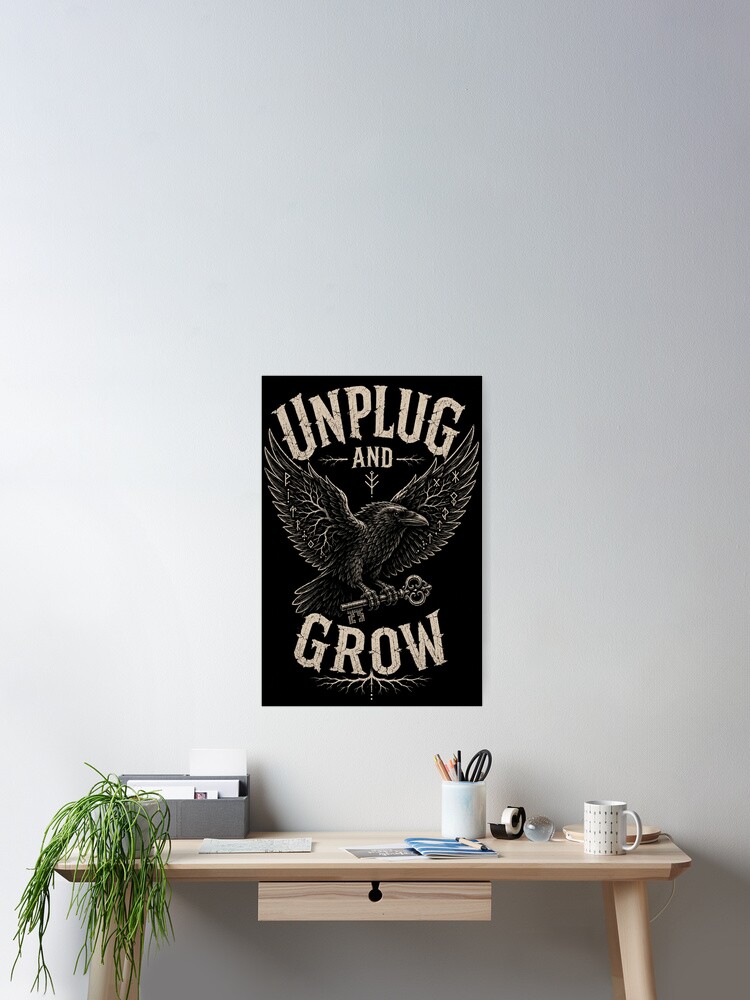
Unplug and Grow: Our unique manifesto in a graphic form. It stands as a symbol of the growth that unfolds only when one consciously disconnects from the matrix of mass consumption and digital noise, leaving space for one’s true being to evolve at its own natural rhythm.

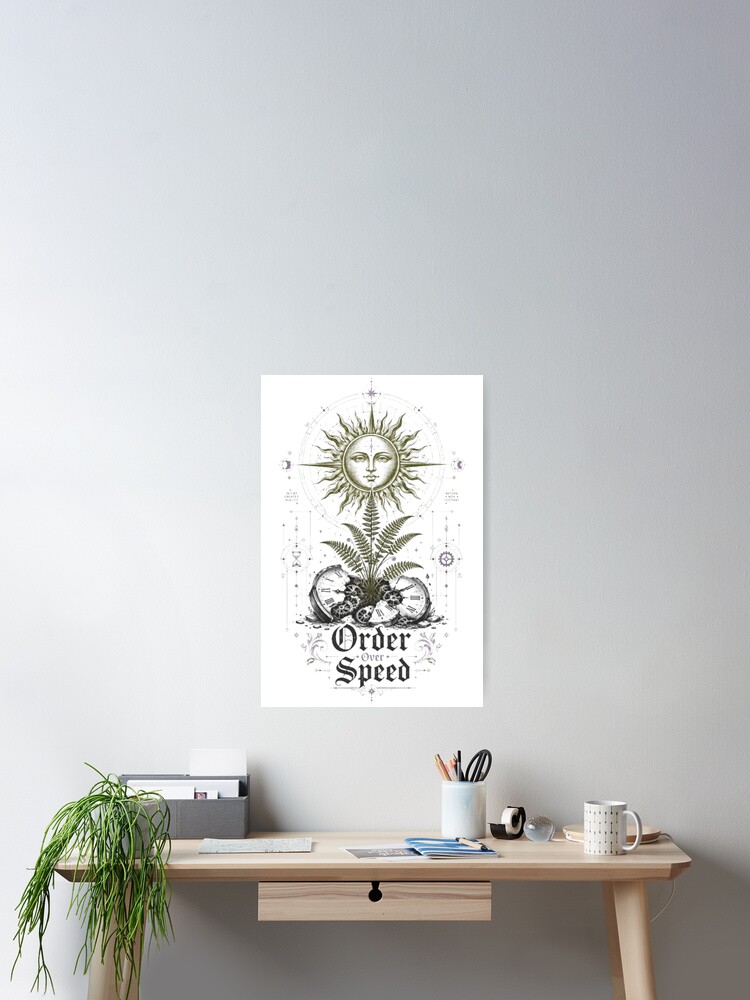
Order Matters More Than Speed: Learning Without Overwhelm
In a world that celebrates speed and instant results, it is easy to lose sight of the fact that the most stable things in nature grow the slowest. Attempting to change an entire relationship with resources overnight usually leads to exhaustion and giving up. True transformation does not lie in aggressive cuts, but in understanding that the sequence of steps is far more important than the speed at which one moves through them.
Shifting the Horizon: 10 Minutes a Day vs. a Weekend Campaign
It is often believed that major life turnarounds require radical actions—such as isolated, exhausting “weekend campaigns” where one attempts to read an entire book or completely reorganize a multi-year budget all at once. However, such an approach rarely brings lasting peace.
Great and essential changes occur when people continue to do the same work, but with a completely new, quieted intention within themselves. Shifting the horizon begins with just ten minutes of dedicated stillness each day. Ten minutes in which one mindfully observes their own impulses, reads two pages of meaningful literature, or records the daily outflow of resources into the Ataraxia Notion Planner. Through this small, daily rhythm, old patterns are not violently torn down; instead, they are slowly and imperceptibly replaced by a new inner discipline.
A Guideline for the Next Step on the Path
Once the mind is liberated from the pressure of having to know everything right away, the horizon becomes significantly clearer. Mastering theoretical foundations and recognizing one’s own mental filters builds a solid groundwork, but the path does not end there.
As a natural continuation of this shared exploration, space subtly opens up for the next topic, which will focus on practical application—Seven Baby Steps to Financial Peace. There, the focus will shift to entirely tangible guidelines and simple tools for a gradual exit from financial chaos, step by step, without disrupting inner
Question of the Day (A Guideline for Inner Dialogue)
While arranging these notes and mindfully exploring the path, one question remained to echo deeply in the stillness: How do we liberate ourselves from hidden forms of bondage, and how do we stop depending on the ignorance, insolence, and hostility of others?
In a world that frequently imposes aggressive patterns and superficial values, a person easily finds themselves in a position of dependency—whether on the opinions of others or on economic pressures subtly designed to maintain a state of constant tension. The answer, however, might lie precisely in building one’s own, independent micro-universe of literacy—both mental and financial.
When the fundamental rules of the game are understood, and when the mind is trained to recognize and quiet the digital noise, external storms lose their power to rule over our inner peace (Ataraxia). In this context, financial literacy does not serve the accumulation of wealth for the sake of power; instead, it becomes an act of inner resistance and a defense of one’s own freedom. It creates a sacred space where no one else can dictate a person’s peace.
"Seek the knowledge that does not shout from a screen, but the kind that brings peace when all screens are turned off."
SoTheWay is more than a blog. It’s a guide for your everyday small victories.
✨ Explore the entire SoTheWay galaxy →FAQ — Frequently Asked Questions for Inner Peace and Stability
How do I start learning about money if I am starting entirely from zero?

Beginning your journey into personal finance does not require mastering complex economic charts, but shifting your mental habits. The first and most essential guideline is to mindfully observe your income and expenses through the lens of slow living. Instead of overwhelming your mind with information, it is wise to set aside just 10 minutes a day to read meaningful literature or structure your thoughts in the Ataraxia Notion Planner, allowing knowledge to settle quietly, free from stress and panic.
What is financial literacy without the noise?

Financial literacy without the noise is the ability to recognize and consciously filter out superficial advice and the aggressive marketing tactics of modern internet sensations. In an era where economic absurdity has become a trend, building a personal filter for information serves as a protective shield for our inner peace. This approach teaches us to manage resources based on long-term principles and rational tools, rather than impulses and digital clamor.
What are the best books on money and financial literacy for beginners?
For a stable beginning free from cognitive overload, we recommend titles that focus on behavioral psychology and the discipline of thought. Daniel Kahneman’s
“Thinking, Fast and Slow”
helps us understand and restrain our impulsive spending, while Cal Newport’s
“Digital Minimalism”
offers a profound economic lesson on how reducing digital noise preserves both our wallet and our attention. These and similar editions can be explored through carefully selected resources on trusted platforms like Korisna knjiga and Bookshop.
How can I free myself from financial stress and information overload?
Financial stress is diminished by shifting your horizon from speed to the sequence of steps. Instead of attempting to master everything at once, stability is built by understanding five foundational pillars: income, expenses, debt, savings, and investing. When focus shifts away from speculation toward tangible, tranquil frameworks like Treesury green bonds, learning about money is liberated from pressure and becomes a natural process of growth.
What is the next step after mastering the basics of financial literacy?

Once the mind grows quiet and steady, theoretical filters are established, it is time for practical application through small, tangible steps in daily life. Within the Learning That Transforms cycle, the next step leads to a mindful and simple guide titled
Seven Baby Steps to Financial Peace
is designed to help map out an exit from chaos and debt, step by step, while safeguarding your inner freedom.
How do I recognize the difference between a true need and an impulsive purchase?
Recognizing this difference requires a mindful pause before a purchasing decision is made. Every impulsive expense is most often an attempt to quiet an inner tension or dissatisfaction through material things. From the perspective of inner discipline, digital tools—such as price-comparison extensions and budget-planning platforms—should not serve reckless spending; on the contrary, they become allies for mindful evaluation and planned shopping without pressure. When a rule is established to wait and reflect before any purchase, the mind reclaims control over the wallet, and external noise loses its power.
Why does learning about money seem so convoluted and complicated?
The feeling of complexity arises because the shortest words often carry a massive, intricate tail of human fears, insecurities, and social pressures. The word money is spoken in a second, yet it hides labyrinths of emotion within itself. When a person first confronts the financial world, the natural impulse is to grasp everything at once, which leads to a mental block. Instead of trying to manage a tempest in a teacup, the solution is to simply shrug your shoulders at the sheer volume of information, slow down, and realize that stability and inner peace are built by mindfully adopting one simple concept at a time.